
Gazing into a Brilliant River of Stars That 80% of Americans Can No Longer See

15 Jun 2026
News
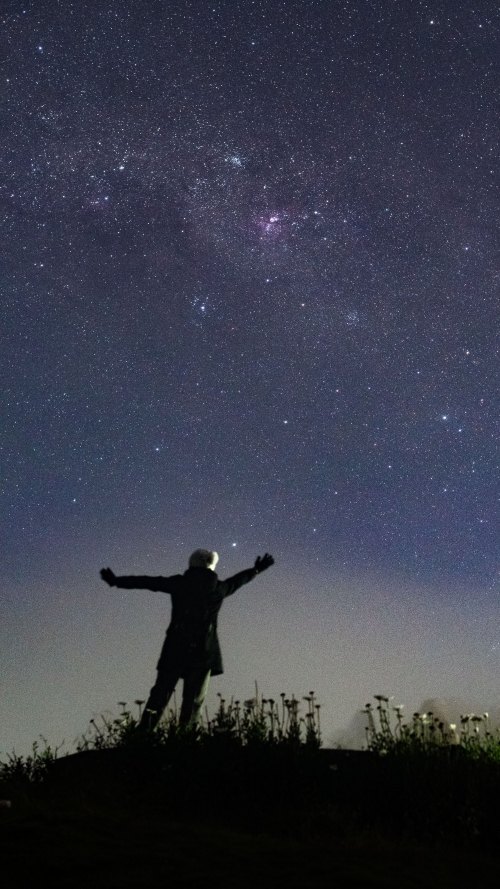
Imagine looking skyward on an inky, dark night. Gazing into an unobstructed view granting some of the best stargazing in North America. Any day of the year. Any hour of the night.
Where the majestic sweep of the Milky Way, that gorgeous river of stars that 80% of Americans can no longer see due to light pollution, is clearly visible, gently wrapping around Venus, Mars, Jupiter, Saturn, and Mercury. Where more than 7,500 brilliant stars dance above you, including the constellations of Scorpius, Sagittarius, Orion, Canis Major, Ursa Major, and Cassiopeia.
Thanks to an outstanding joint effort from the Badlands National Park Conservancy, park leadership, and regional advocates, visitors to the beloved, otherworldly geographic wonder for generations to come will now enjoy that delight. The Badlands has been officially recognized as an International Dark Sky Park.
At the End of the Day, We’re Just Missing the Dark
While artificial light has revolutionized the way we’re able to live and work well after the sun fades over the horizon, it also has a tendency to disrupt wildlife and block our view of the brilliantly luminous world above us, which hasn’t been doing our health any favors.
Things like sleep disruption, suppressed melatonin production, and even chronic conditions like cancer, diabetes, and obesity have all been linked to artificial light pollution, which obliterates the night sky in a swampy fog.
In an effort to preserve our ability to see, enjoy and benefit from the night sky, the International Dark Sky Association began a movement in 1988 to promote win-win solutions that allow us to continue enjoying the benefits of nocturnal illumination, but not at the cost of those lights blocking us from our view of the night sky.
“In the U.S., some of our national parks are just about the last refuge of darkness,” Dan Duriscoe of the National Park Service was quoted in an article from the National Oceanic and Atmospheric Administration. “We’re lucky to have a lot of public land that provides a buffer from large cities.”
That includes the 244,000 acres of the Badlands, which is now one of only 270 DarkSky certified places around the globe, 140 of which are parks.
Dark Sky Designation Will Have Tremendously Positive Economic Effect on Wall
As gateway to the Badlands National Park, Wall is uniquely positioned to enjoy a significant economic benefit on the heels of the Dark Sky designation.
Our amazing hotels, restaurants, and shops will be welcoming more visitors for longer stays as stargazers from across the world turn daytripping or a “just passing through” into an overnight stay in Wall.
Amateur and pro astronomers alike are also anticipated to visit the park during what’s traditionally considered the “off” season, increasing the likelihood of them coming to our area in the fall and winter.
“We are so proud of the remarkable efforts made towards the Badlands achieving a Dark Sky designation,” said Wall Economic Development Corporation executive director Dr. Rochan Burrell. “As the launchpad to the park, we’re also thrilled to be able to extend an invitation to a whole new demographic of travelers to visit the wonderful community of Wall.”
We also hope to see you all during the Badland’s upcoming Astronomy Festival July 17-19th! From special guest speakers to stargazing activities, it’s the perfect opportunity to check out those stellar, dark skies and savor the wonders of space exploration.
More Topics